The Triad Method is a little bit of a problem for me from the point of view of homoeopathic philosophy and here’s why. I’m classically trained so the basic prescribing method I am familiar with is one appropriate remedy, watch and wait. Whether prescribing for an acute or chronic case. Then repeat or change the remedy according to the response.
In the 6 months before I left for Botswana I’d been familiarising myself with Eizayager’s layers method and so when I was introduced to the Triad Method at my induction for the project it sounded like a reasonable way of going about things. In theory, that is.
In practice it is a lot different. You’ll see in the last post I added (below this one) I’ve given myself a few criteria to use to help me prescribe using the Triad Method, and I’ll use the method because I agreed to do so. Thus, it is possible to rationalise to oneself how to use the triad method. The most difficult thing I am finding in practice at the moment is working out which part of the prescription has worked.
My understanding of the practice of homoeopathy is that you don’t prescribe for separate parts of the case and this is what it feels like is being done here at the project. Having said that, I would feel more at ease with this prescribing method if we were prescribing only two remedies, one for the appropriate totality of symptoms and one nosode. The third remedy seems to me to be superfluous and I feel I’m prescribing it simply to cover bases. This is a scary thing to admit as people are coming to us for help and will surely expect us to know what we are doing.
The other source of confusion about this method is having a remedy for the ‘acute layer’. So far noone I have seen has presented with acute symptoms, either an acute exacerbation of a chronic condition or an opportunistic infection, acute miasm, etc. etc. so merely the name of this layer causes me confusion too.
As I’m sure you can see, I’m pretty confused about this but trying to deal with the confusion by using reflective practice and supervision. It helps me to think things through by writing them down and hopefully by the time I’m further through my stay here I’ll have resolved my questions about the method. I also hope that what I write is being read by other homoeopaths and I’m able to share my experience with them.
The major headache for me at present, after having taken the case and found a third remedy which I feel I can justify within the case is which part of the previous prescription has worked. Patrly this is due to summary sheets only having recently been introduced. 99% of cases have to be read through before the consultations and the key points of the case drawn together while doing this. This is quite a task as the notes are handwritten by several successive homoeopaths. You’ll see throughout the histories that some prescriptions work very well and the next prescription is changed for no apparent reason. Why? I think part of this is due to different practitioners from different backgrounds seeing different things in a case and responding the best way they can see. Another reasonn seems to be practitioners departing from the protocols that have been set by the project. Yet, I still ask myself, why wasn’t the last prescription which brought about a positive change for the patient repeated?
I’ll keep you all posted about how my understanding of the method and it’s application develops. I’m sure all the homoeopaths have been dying for me to actually get on to the subject of actually prescribing etc. The Triad Method is a little bit of a problem for me from the point of view of homoeopathic philosophy and here’s why. I’m classically trained so the basic prescribing method I am familiar with is one appropriate remedy, watch and wait. Whether prescribing for an acute or chronic case. Then repeat or change the remedy according to the response.
In the 6 months before I left for Botswana I’d been familiarising myself with Eizayager’s layers method and so when I was introduced to the Triad Method at my induction for the project it sounded like a reasonable way of going about things. In theory, that is.
In practice it is a lot different. You’ll see in the last post I added (below this one) I’ve given myself a few criteria to use to help me prescribe using the Triad Method, and I’ll use the method because I agreed to do so. Thus, it is possible to rationalise to oneself how to use the triad method. The most difficult thing I am finding in practice at the moment is working out which part of the prescription has worked.
My understanding of the practice of homoeopathy is that you don’t prescribe for separate parts of the case and this is what it feels like is being done here at the project. Having said that, I would feel more at ease with this prescribing method if we were prescribing only two remedies, one for the appropriate totality of symptoms and one nosode. The third remedy seems to me to be superfluous and I feel I’m prescribing it simply to cover bases. This is a scary thing to admit as people are coming to us for help and will surely expect us to know what we are doing.
The other source of confusion about this method is having a remedy for the ‘acute layer’. So far noone I have seen has presented with acute symptoms, either an acute exacerbation of a chronic condition or an opportunistic infection, acute miasm, etc. etc. so merely the name of this layer causes me confusion too.
As I’m sure you can see, I’m pretty confused about this but trying to deal with the confusion by using reflective practice and supervision. It helps me to think things through by writing them down and hopefully by the time I’m further through my stay here I’ll have resolved my questions about the method. I also hope that what I write is being read by other homoeopaths and I’m able to share my experience with them.
The major headache for me at present, after having taken the case and found a third remedy which I feel I can justify within the case is which part of the previous prescription has worked. Patrly this is due to summary sheets only having recently been introduced. 99% of cases have to be read through before the consultations and the key points of the case drawn together while doing this. This is quite a task as the notes are handwritten by several successive homoeopaths. You’ll see throughout the histories that some prescriptions work very well and the next prescription is changed for no apparent reason. Why? I think part of this is due to different practitioners from different backgrounds seeing different things in a case and responding the best way they can see. Another reasonn seems to be practitioners departing from the protocols that have been set by the project. Yet, I still ask myself, why wasn’t the last prescription which brought about a positive change for the patient repeated?
I’ll keep you all posted about how my understanding of the method and it’s application develops. I’m sure all the homoeopaths have been dying for me to actually get on to the subject of actually prescribing etc.
In the 6 months before I left for Botswana I’d been familiarising myself with Eizayager’s layers method and so when I was introduced to the Triad Method at my induction for the project it sounded like a reasonable way of going about things. In theory, that is.
In practice it is a lot different. You’ll see in the last post I added (below this one) I’ve given myself a few criteria to use to help me prescribe using the Triad Method, and I’ll use the method because I agreed to do so. Thus, it is possible to rationalise to oneself how to use the triad method. The most difficult thing I am finding in practice at the moment is working out which part of the prescription has worked.
My understanding of the practice of homoeopathy is that you don’t prescribe for separate parts of the case and this is what it feels like is being done here at the project. Having said that, I would feel more at ease with this prescribing method if we were prescribing only two remedies, one for the appropriate totality of symptoms and one nosode. The third remedy seems to me to be superfluous and I feel I’m prescribing it simply to cover bases. This is a scary thing to admit as people are coming to us for help and will surely expect us to know what we are doing.
The other source of confusion about this method is having a remedy for the ‘acute layer’. So far noone I have seen has presented with acute symptoms, either an acute exacerbation of a chronic condition or an opportunistic infection, acute miasm, etc. etc. so merely the name of this layer causes me confusion too.
As I’m sure you can see, I’m pretty confused about this but trying to deal with the confusion by using reflective practice and supervision. It helps me to think things through by writing them down and hopefully by the time I’m further through my stay here I’ll have resolved my questions about the method. I also hope that what I write is being read by other homoeopaths and I’m able to share my experience with them.
The major headache for me at present, after having taken the case and found a third remedy which I feel I can justify within the case is which part of the previous prescription has worked. Patrly this is due to summary sheets only having recently been introduced. 99% of cases have to be read through before the consultations and the key points of the case drawn together while doing this. This is quite a task as the notes are handwritten by several successive homoeopaths. You’ll see throughout the histories that some prescriptions work very well and the next prescription is changed for no apparent reason. Why? I think part of this is due to different practitioners from different backgrounds seeing different things in a case and responding the best way they can see. Another reasonn seems to be practitioners departing from the protocols that have been set by the project. Yet, I still ask myself, why wasn’t the last prescription which brought about a positive change for the patient repeated?
I’ll keep you all posted about how my understanding of the method and it’s application develops. I’m sure all the homoeopaths have been dying for me to actually get on to the subject of actually prescribing etc. The Triad Method is a little bit of a problem for me from the point of view of homoeopathic philosophy and here’s why. I’m classically trained so the basic prescribing method I am familiar with is one appropriate remedy, watch and wait. Whether prescribing for an acute or chronic case. Then repeat or change the remedy according to the response.
In the 6 months before I left for Botswana I’d been familiarising myself with Eizayager’s layers method and so when I was introduced to the Triad Method at my induction for the project it sounded like a reasonable way of going about things. In theory, that is.
In practice it is a lot different. You’ll see in the last post I added (below this one) I’ve given myself a few criteria to use to help me prescribe using the Triad Method, and I’ll use the method because I agreed to do so. Thus, it is possible to rationalise to oneself how to use the triad method. The most difficult thing I am finding in practice at the moment is working out which part of the prescription has worked.
My understanding of the practice of homoeopathy is that you don’t prescribe for separate parts of the case and this is what it feels like is being done here at the project. Having said that, I would feel more at ease with this prescribing method if we were prescribing only two remedies, one for the appropriate totality of symptoms and one nosode. The third remedy seems to me to be superfluous and I feel I’m prescribing it simply to cover bases. This is a scary thing to admit as people are coming to us for help and will surely expect us to know what we are doing.
The other source of confusion about this method is having a remedy for the ‘acute layer’. So far noone I have seen has presented with acute symptoms, either an acute exacerbation of a chronic condition or an opportunistic infection, acute miasm, etc. etc. so merely the name of this layer causes me confusion too.
As I’m sure you can see, I’m pretty confused about this but trying to deal with the confusion by using reflective practice and supervision. It helps me to think things through by writing them down and hopefully by the time I’m further through my stay here I’ll have resolved my questions about the method. I also hope that what I write is being read by other homoeopaths and I’m able to share my experience with them.
The major headache for me at present, after having taken the case and found a third remedy which I feel I can justify within the case is which part of the previous prescription has worked. Patrly this is due to summary sheets only having recently been introduced. 99% of cases have to be read through before the consultations and the key points of the case drawn together while doing this. This is quite a task as the notes are handwritten by several successive homoeopaths. You’ll see throughout the histories that some prescriptions work very well and the next prescription is changed for no apparent reason. Why? I think part of this is due to different practitioners from different backgrounds seeing different things in a case and responding the best way they can see. Another reasonn seems to be practitioners departing from the protocols that have been set by the project. Yet, I still ask myself, why wasn’t the last prescription which brought about a positive change for the patient repeated?
I’ll keep you all posted about how my understanding of the method and it’s application develops. I’m sure all the homoeopaths have been dying for me to actually get on to the subject of actually prescribing etc.
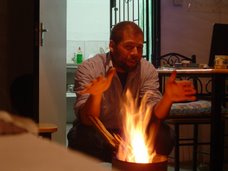
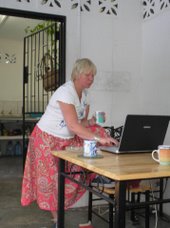
On another tack altogether…It’s ten past nine on a cool June’s night. Julia has, within the last hour recovered from an energy sapping cold type thing, thanks to homoeopathy and Hilary-Coffee-Shop’s thoughtfully sending Julia some Butternut Squash Soup and Carrot Cake. Julia is blasting out tunes on the Lutheran Church’s guitar which she borrowed to restring. We’ve had I’ve Been A Miner For A Heart Of Gold, Lady Darbanvilles, the song which begins Ziggy Played Guitar, and several others that went in one ear and out the other while I was typing.
So, when the working day is done we get a good opportunity to relax and re-energise like good, hard thinking, hard working, reflective homoeopaths should.
So, when the working day is done we get a good opportunity to relax and re-energise like good, hard thinking, hard working, reflective homoeopaths should.