In a November posting you can read part of a response by Jeanette Winterson to an article in The Guardian by Ben Goldacre. Niow you can find out a little more about who Ben Goldacre is and who he works for.
AGANST DR BEN GOLDACRE
Cultural Dwarfs and Junk Journalism is Martin Walker’s fourth book charting the development of the corporate science lobby that has grown rapidly since New Labour came to power in 1997. One of the most recent exponents of the Lobby is Dr Ben Goldacre who has regurgitated a bad ‘Science’ column in the Guardian newspaper since 2003. Like other quackbusters Goldacre claims to write factually based and scientifically accurate articles about health, medicine and science either supporting scientists and doctors or criticising individuals involved in alternative or nutritional health care. Goldacre’s writing, however, actually reflects the ideology of powerful industrial, technological and political vested interests.Goldacre who it is claimed is a Junior doctor working in a London NHS hospital is actually a clinical researcher working at the centre of New Labour’s Orwellian spin operation that puts a sympathetic gloss on anything shown to create adverse reactions from MMR to Wi-Fi, while at the same time undermining cost-effective and long tried alternative therapies such as acupuncture and homoeopathy.
Goldacre is involved with public health researchers well known for trying to prove that those who claim to be adversely affected by pollutants in our modern high-technology society, suffer from ‘false illness beliefs’.Cultural Dwarfs and Junk Journalism, investigates Goldacre’s role in industry lobby groups and puts another point of view in defense of some of the people whom he has attacked, belittled, satirized, castigated, vilified, maligned and opined against in his junk journalism.
* * *Cultural Dwarfs and Junk Journalism: Ben Goldacre, quackbusters and corporate science, is available from the Slingshot Publications web site as a free download, from mid-day on Wednesday January 2nd. To be effective as a campaigning document, it is important that this book is distributed far and wide as quickly as possible. Please forward this publication information together with the Slingshot Publications web site address. Another thing that will help with the book’s distribution is the writing of even very short reviews for different web sites, this helps get the book onto Google listings.
This book is free and can be downloaded from the Slingshot Publications site: www.slingshotpublications.com. Please distribute it as widely as possible and if you think that the work is worth it, consider making a small donation. Also on the Slingshot site, is Martin Walker’s last book, The Fate of a Good Man. The book tells the story of Jim Wright, the investigation into him, his prosecution and trial by the Big Pharma regulatory agency, the MHRA. A good read at £5.00
Showing posts with label Homeopathy. Show all posts
Showing posts with label Homeopathy. Show all posts
Thursday, February 07, 2008


Thursday, July 26, 2007
Three Patients Sitting In The Sun.
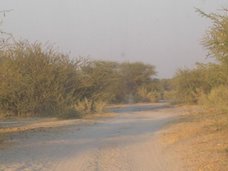
Today (Wednesday 25th July) was one of our hardest working days। Wednesdays usually are as they are the days we do home visits। Home visits are hard work for several reasons. They require us driving over very rough and/or sandy roads and we often get stuck in the sand; Consultations are often taken outside patients houses in the yard in the heat of the sun; We see very weak and often bedridden patients; We see very severe physical pathology. On the plus side we meet very strong people.
The patients’ strength makes their condition all the more poignant as we meet very strong people who are imprisoned in their own bodies through weakness. You can hear their strength in their voices, see it in their eyes or hear it in their words and it makes them appear in a very pitiful and tortured state as they cannot fend for themselves or engage with the world at large any more.
Seeing this strength although saddening to see imprisoned in a bed makes me optimistic that the patient will in time recover and this week I’ve seen this strength win through.
Today we were very happy to see three of our patients who were bedridden a week ago sitting outside in the sun. One was the albino patient I described in an earlier posting. Her first words when we met her were ‘I’m well!’. Her ulcers were clearly healing and she was very pleased to show us the progress they were making whereas at our previous visit shewas very weak and in a lot of pain and her ulcers were open wounds.
Our second patient had been in bed for months with diarrhoea and vomiting. Today she was sitting in her yard in the shade of a tree, proud to tell us that she could walk to her outhouse and back. Next time, she told us ‘You’ll see me cooking’.
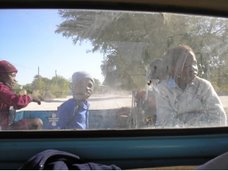
Our third patient had also had constant diarrhoea which was now improved. Like the other patients she was sitting in her yard in the sun with her mother, her daughter and her grandchildren who were all playing at ‘foreigners in a decrepit pick-up stuck in the sand’.
I’m not describing people rising from the dead here. In all three cases there is a long way to go before they are as healthy as they’d like to be but the fact that they are out of bed, have more physical comfort and energy than before and doing things they enjoy is a big step for them on the road to recovery.
I’m pleased to say that many of the patients I am seeing now are improving or are returning to homoeopathy after a long time of being well. I’m not saying that this is all down to my sudden appearance on the scene. It is more due to the strength which the patients themselves posess and the many other homoeopaths who have added their skill to the proces of recovery.
The patients’ strength makes their condition all the more poignant as we meet very strong people who are imprisoned in their own bodies through weakness. You can hear their strength in their voices, see it in their eyes or hear it in their words and it makes them appear in a very pitiful and tortured state as they cannot fend for themselves or engage with the world at large any more.
Seeing this strength although saddening to see imprisoned in a bed makes me optimistic that the patient will in time recover and this week I’ve seen this strength win through.
Today we were very happy to see three of our patients who were bedridden a week ago sitting outside in the sun. One was the albino patient I described in an earlier posting. Her first words when we met her were ‘I’m well!’. Her ulcers were clearly healing and she was very pleased to show us the progress they were making whereas at our previous visit shewas very weak and in a lot of pain and her ulcers were open wounds.
Our second patient had been in bed for months with diarrhoea and vomiting. Today she was sitting in her yard in the shade of a tree, proud to tell us that she could walk to her outhouse and back. Next time, she told us ‘You’ll see me cooking’.
Our third patient had also had constant diarrhoea which was now improved. Like the other patients she was sitting in her yard in the sun with her mother, her daughter and her grandchildren who were all playing at ‘foreigners in a decrepit pick-up stuck in the sand’.
I’m not describing people rising from the dead here. In all three cases there is a long way to go before they are as healthy as they’d like to be but the fact that they are out of bed, have more physical comfort and energy than before and doing things they enjoy is a big step for them on the road to recovery.
I’m pleased to say that many of the patients I am seeing now are improving or are returning to homoeopathy after a long time of being well. I’m not saying that this is all down to my sudden appearance on the scene. It is more due to the strength which the patients themselves posess and the many other homoeopaths who have added their skill to the proces of recovery.
The Flexibility of The Triad Method.
It’s when there is a change in symptoms rather than an improvement after the first prescription that one can see the flexibility of the triad method. An easy example togive is the first case at a subsequent follow up.
***The patient did well on their first and second prescriptions but they have returned. Their joint pains have returned but they find that they are now worse at the end of the day when they are at rest. They have to keep moving to keep the pains at bay. They began again around the time their children were threatened with expulsion from school because they were late with school fees (Everyone has to pay school fees in Botswana whether government or private school). The patient became worried for their children's future and took on extra work. Nothing much else worries them aside from their families welfare and their responsibilities.
In this case the aetiology of the joint pains and their characteristic of being worse for rest and better for continued motion indicates not Bryonia but Rhus Tox. The patients underlying constitution and background remain unchanged so far so the prescription can be repeated with the Bryonia, the initial remedy for the patients joint symptoms being changed for Rhus. Tox. Calc and Carc can be repeated as before.
***The patient did well on their first and second prescriptions but they have returned. Their joint pains have returned but they find that they are now worse at the end of the day when they are at rest. They have to keep moving to keep the pains at bay. They began again around the time their children were threatened with expulsion from school because they were late with school fees (Everyone has to pay school fees in Botswana whether government or private school). The patient became worried for their children's future and took on extra work. Nothing much else worries them aside from their families welfare and their responsibilities.
In this case the aetiology of the joint pains and their characteristic of being worse for rest and better for continued motion indicates not Bryonia but Rhus Tox. The patients underlying constitution and background remain unchanged so far so the prescription can be repeated with the Bryonia, the initial remedy for the patients joint symptoms being changed for Rhus. Tox. Calc and Carc can be repeated as before.
More Medicine of Experience.
I’d like to let you know more about the triad method and how I am using it in the treatment of patients with HIV. I described it in an earlier post as being like an often repeated single remedy. It is like that but it is also a subtle and flexible therapeutic intervention.
To make this easier I’ll give you an example of triad prescriptions for the sort of cases we often see. The cases given below are outline examples as a full case taking would be too much to present.
*** A patient has begun to get joint pains which are worse on motion and better for rest, these areaccompanied by a terrible headache which makes them just want to sit still and not be bothered by anybody. They naturally have become very bad tempered. Their focus in life is their home and family as they had to care for younger siblings and older relatives from an early age their parents died of cancer. They have recently had to cope with a bereavement and now care for another family members’ children. They take this responsibility very seriously. Their major worries are the pains which prevent them from working and this in turn makes them worry about how they will cope with their responsibilities.
After repertorisation the well indicated remedies include Bryonia, Cal.Carb. and Carcinosin. In this sort of case we would usually give each remedy one day apart in the appropriate potency for up 3 weeks Bryonia on Mondays, Calc. on Wednesdays and Carc. on Fridays.
Case 2
*** A patient is seen at home and they present with with diarrhoea accompanied by burning pains, respiratory difficulties, generalized physical pains at night and a very depresed state of mind. This has been continuing on and off for a long time but is now a chronic state and they are rapidly emaciating though they are trying to eat.
The well indicated remedies repertorise out as Ars. Alb.; Carbo.Veg.; and Syph.
As the condition is long standing and day by day worsens the patients health the remedies would be given over the course of a day in an appropriately low potency for a week.
In these hypothetical cases the patients show a good response at the follow up, they’re not completely cured but they’re much better than before.
So far so good. In these two cases the triad prescription has acted like a single remedy. There’s been a good reaction in the patient on all levels and the prescription can be repeated with confidence that it will continue the curative response in the patient.
To make this easier I’ll give you an example of triad prescriptions for the sort of cases we often see. The cases given below are outline examples as a full case taking would be too much to present.
*** A patient has begun to get joint pains which are worse on motion and better for rest, these areaccompanied by a terrible headache which makes them just want to sit still and not be bothered by anybody. They naturally have become very bad tempered. Their focus in life is their home and family as they had to care for younger siblings and older relatives from an early age their parents died of cancer. They have recently had to cope with a bereavement and now care for another family members’ children. They take this responsibility very seriously. Their major worries are the pains which prevent them from working and this in turn makes them worry about how they will cope with their responsibilities.
After repertorisation the well indicated remedies include Bryonia, Cal.Carb. and Carcinosin. In this sort of case we would usually give each remedy one day apart in the appropriate potency for up 3 weeks Bryonia on Mondays, Calc. on Wednesdays and Carc. on Fridays.
Case 2
*** A patient is seen at home and they present with with diarrhoea accompanied by burning pains, respiratory difficulties, generalized physical pains at night and a very depresed state of mind. This has been continuing on and off for a long time but is now a chronic state and they are rapidly emaciating though they are trying to eat.
The well indicated remedies repertorise out as Ars. Alb.; Carbo.Veg.; and Syph.
As the condition is long standing and day by day worsens the patients health the remedies would be given over the course of a day in an appropriately low potency for a week.
In these hypothetical cases the patients show a good response at the follow up, they’re not completely cured but they’re much better than before.
So far so good. In these two cases the triad prescription has acted like a single remedy. There’s been a good reaction in the patient on all levels and the prescription can be repeated with confidence that it will continue the curative response in the patient.
The Dawning Of A New Era
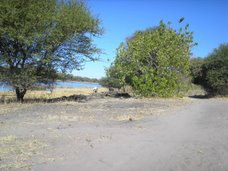
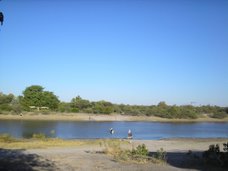
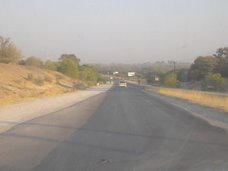
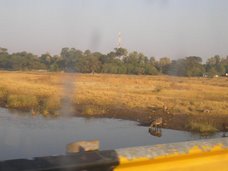
The river is halfway up the tree trunk which marks the makorro stop behind our house. The river is high all along the banks. The landscaspe here is in constant flux. The new road being built has successive layers of surfasce put on it and levelled off. The tyre tracks on the dirt roads which have been carved in the land beside it, winding in and out of trees seem to develop and lose ruts and potholes by the day.
We’re entering a new and exciting phase here in Maun. It is only one third as exciting now as it was a week or two ago but it is still exciting. Initially Anne and I were to be responsible for setting up a new clinic in Sehitwa, 90K southwest of Maun on the shores of Lake Ngami. We were also given responsibility for re-energising the poorly attended Senonori Support Group Clinic and of re-establishing our relationship with Bana Ba Letsatsi which means children of the street and as you can see from it’s name is a charity for streetchildren and children orphaned by HIV.
Sehitwa and Senonori unfortunately had to be put on the back burner because of logistical difficulties. As Sehitwa is 90k away we would have had to have used a vehicle other than our backie which is in pretty poor condition because it has to cope with some pretty rough terrain and is driven by several different people each year who each have to get used to an antiquated backie and very rough roads. This problem was almost solved by a member of the Lutheran Church’s congragation offering to loan us a vehicle for the journey. The only problem was, they wanted us to pay for mileage/wear and tear to the vehicle at 3 pula per kilometer in addition to us paying for petrol.
Then there was the question of which day we should go. We’d all agreed that once a month was a good routine for a one day clinic at the Lutheran Church in Sehitwa. For the Sehitwa group Thursdays was a god day. For MHP Mondays were preferable. Because there were too many if’s and but’s this project has to beleft until we get a new vehicle in September.
Senonori is another pickle. The time before last when we visited we saw only one patient. We had a chat with Rosinah the Senonori Support Group leader and she suggested that it was due to people’s fear of being stigmatised that they didn’t come to see us. We had another discussion with Rosinah this week and she told us the following story. As well as people in the area being worried about becoming stigmatised if they are seen visiting the homoeopathic clinic there is also a problem with the support group itself with whom we work. I can’t be quite sure of what it is despite having spoken to Rosinah who is Senonori support Group’s founder. It has something to do with it not being registered with the regional council department which looks after support groups despite SSG having applied for registration 3 years ago. Rosinah tells me that in addition to a lack of local government support and the fear of stigma of it’s members there is also now a suspicion in the community that Maun Homeopathy Project is something to do with the local council and we are checking up on them.
We’d arranged with Rosinah on several occasions to speak at local Kgotla meetings but due to one cause or another they’ve not happened. So, we are to continue turning up at Senonori but not to expect much to happen.
So, like I said, due to the Senonori and Sehitwa projects being put on the shelf things are only one third as exciting as they appeared to be. We do still have Bana Ba Letsatsi to look forward to which we will begin in August.
We’re entering a new and exciting phase here in Maun. It is only one third as exciting now as it was a week or two ago but it is still exciting. Initially Anne and I were to be responsible for setting up a new clinic in Sehitwa, 90K southwest of Maun on the shores of Lake Ngami. We were also given responsibility for re-energising the poorly attended Senonori Support Group Clinic and of re-establishing our relationship with Bana Ba Letsatsi which means children of the street and as you can see from it’s name is a charity for streetchildren and children orphaned by HIV.
Sehitwa and Senonori unfortunately had to be put on the back burner because of logistical difficulties. As Sehitwa is 90k away we would have had to have used a vehicle other than our backie which is in pretty poor condition because it has to cope with some pretty rough terrain and is driven by several different people each year who each have to get used to an antiquated backie and very rough roads. This problem was almost solved by a member of the Lutheran Church’s congragation offering to loan us a vehicle for the journey. The only problem was, they wanted us to pay for mileage/wear and tear to the vehicle at 3 pula per kilometer in addition to us paying for petrol.
Then there was the question of which day we should go. We’d all agreed that once a month was a good routine for a one day clinic at the Lutheran Church in Sehitwa. For the Sehitwa group Thursdays was a god day. For MHP Mondays were preferable. Because there were too many if’s and but’s this project has to beleft until we get a new vehicle in September.
Senonori is another pickle. The time before last when we visited we saw only one patient. We had a chat with Rosinah the Senonori Support Group leader and she suggested that it was due to people’s fear of being stigmatised that they didn’t come to see us. We had another discussion with Rosinah this week and she told us the following story. As well as people in the area being worried about becoming stigmatised if they are seen visiting the homoeopathic clinic there is also a problem with the support group itself with whom we work. I can’t be quite sure of what it is despite having spoken to Rosinah who is Senonori support Group’s founder. It has something to do with it not being registered with the regional council department which looks after support groups despite SSG having applied for registration 3 years ago. Rosinah tells me that in addition to a lack of local government support and the fear of stigma of it’s members there is also now a suspicion in the community that Maun Homeopathy Project is something to do with the local council and we are checking up on them.
We’d arranged with Rosinah on several occasions to speak at local Kgotla meetings but due to one cause or another they’ve not happened. So, we are to continue turning up at Senonori but not to expect much to happen.
So, like I said, due to the Senonori and Sehitwa projects being put on the shelf things are only one third as exciting as they appeared to be. We do still have Bana Ba Letsatsi to look forward to which we will begin in August.
Monday, July 02, 2007
Trouble With Triad
The Triad Method is a little bit of a problem for me from the point of view of homoeopathic philosophy and here’s why. I’m classically trained so the basic prescribing method I am familiar with is one appropriate remedy, watch and wait. Whether prescribing for an acute or chronic case. Then repeat or change the remedy according to the response.
In the 6 months before I left for Botswana I’d been familiarising myself with Eizayager’s layers method and so when I was introduced to the Triad Method at my induction for the project it sounded like a reasonable way of going about things. In theory, that is.
In practice it is a lot different. You’ll see in the last post I added (below this one) I’ve given myself a few criteria to use to help me prescribe using the Triad Method, and I’ll use the method because I agreed to do so. Thus, it is possible to rationalise to oneself how to use the triad method. The most difficult thing I am finding in practice at the moment is working out which part of the prescription has worked.
My understanding of the practice of homoeopathy is that you don’t prescribe for separate parts of the case and this is what it feels like is being done here at the project. Having said that, I would feel more at ease with this prescribing method if we were prescribing only two remedies, one for the appropriate totality of symptoms and one nosode. The third remedy seems to me to be superfluous and I feel I’m prescribing it simply to cover bases. This is a scary thing to admit as people are coming to us for help and will surely expect us to know what we are doing.
The other source of confusion about this method is having a remedy for the ‘acute layer’. So far noone I have seen has presented with acute symptoms, either an acute exacerbation of a chronic condition or an opportunistic infection, acute miasm, etc. etc. so merely the name of this layer causes me confusion too.
As I’m sure you can see, I’m pretty confused about this but trying to deal with the confusion by using reflective practice and supervision. It helps me to think things through by writing them down and hopefully by the time I’m further through my stay here I’ll have resolved my questions about the method. I also hope that what I write is being read by other homoeopaths and I’m able to share my experience with them.
The major headache for me at present, after having taken the case and found a third remedy which I feel I can justify within the case is which part of the previous prescription has worked. Patrly this is due to summary sheets only having recently been introduced. 99% of cases have to be read through before the consultations and the key points of the case drawn together while doing this. This is quite a task as the notes are handwritten by several successive homoeopaths. You’ll see throughout the histories that some prescriptions work very well and the next prescription is changed for no apparent reason. Why? I think part of this is due to different practitioners from different backgrounds seeing different things in a case and responding the best way they can see. Another reasonn seems to be practitioners departing from the protocols that have been set by the project. Yet, I still ask myself, why wasn’t the last prescription which brought about a positive change for the patient repeated?
I’ll keep you all posted about how my understanding of the method and it’s application develops. I’m sure all the homoeopaths have been dying for me to actually get on to the subject of actually prescribing etc. The Triad Method is a little bit of a problem for me from the point of view of homoeopathic philosophy and here’s why. I’m classically trained so the basic prescribing method I am familiar with is one appropriate remedy, watch and wait. Whether prescribing for an acute or chronic case. Then repeat or change the remedy according to the response.
In the 6 months before I left for Botswana I’d been familiarising myself with Eizayager’s layers method and so when I was introduced to the Triad Method at my induction for the project it sounded like a reasonable way of going about things. In theory, that is.
In practice it is a lot different. You’ll see in the last post I added (below this one) I’ve given myself a few criteria to use to help me prescribe using the Triad Method, and I’ll use the method because I agreed to do so. Thus, it is possible to rationalise to oneself how to use the triad method. The most difficult thing I am finding in practice at the moment is working out which part of the prescription has worked.
My understanding of the practice of homoeopathy is that you don’t prescribe for separate parts of the case and this is what it feels like is being done here at the project. Having said that, I would feel more at ease with this prescribing method if we were prescribing only two remedies, one for the appropriate totality of symptoms and one nosode. The third remedy seems to me to be superfluous and I feel I’m prescribing it simply to cover bases. This is a scary thing to admit as people are coming to us for help and will surely expect us to know what we are doing.
The other source of confusion about this method is having a remedy for the ‘acute layer’. So far noone I have seen has presented with acute symptoms, either an acute exacerbation of a chronic condition or an opportunistic infection, acute miasm, etc. etc. so merely the name of this layer causes me confusion too.
As I’m sure you can see, I’m pretty confused about this but trying to deal with the confusion by using reflective practice and supervision. It helps me to think things through by writing them down and hopefully by the time I’m further through my stay here I’ll have resolved my questions about the method. I also hope that what I write is being read by other homoeopaths and I’m able to share my experience with them.
The major headache for me at present, after having taken the case and found a third remedy which I feel I can justify within the case is which part of the previous prescription has worked. Patrly this is due to summary sheets only having recently been introduced. 99% of cases have to be read through before the consultations and the key points of the case drawn together while doing this. This is quite a task as the notes are handwritten by several successive homoeopaths. You’ll see throughout the histories that some prescriptions work very well and the next prescription is changed for no apparent reason. Why? I think part of this is due to different practitioners from different backgrounds seeing different things in a case and responding the best way they can see. Another reasonn seems to be practitioners departing from the protocols that have been set by the project. Yet, I still ask myself, why wasn’t the last prescription which brought about a positive change for the patient repeated?
I’ll keep you all posted about how my understanding of the method and it’s application develops. I’m sure all the homoeopaths have been dying for me to actually get on to the subject of actually prescribing etc.
In the 6 months before I left for Botswana I’d been familiarising myself with Eizayager’s layers method and so when I was introduced to the Triad Method at my induction for the project it sounded like a reasonable way of going about things. In theory, that is.
In practice it is a lot different. You’ll see in the last post I added (below this one) I’ve given myself a few criteria to use to help me prescribe using the Triad Method, and I’ll use the method because I agreed to do so. Thus, it is possible to rationalise to oneself how to use the triad method. The most difficult thing I am finding in practice at the moment is working out which part of the prescription has worked.
My understanding of the practice of homoeopathy is that you don’t prescribe for separate parts of the case and this is what it feels like is being done here at the project. Having said that, I would feel more at ease with this prescribing method if we were prescribing only two remedies, one for the appropriate totality of symptoms and one nosode. The third remedy seems to me to be superfluous and I feel I’m prescribing it simply to cover bases. This is a scary thing to admit as people are coming to us for help and will surely expect us to know what we are doing.
The other source of confusion about this method is having a remedy for the ‘acute layer’. So far noone I have seen has presented with acute symptoms, either an acute exacerbation of a chronic condition or an opportunistic infection, acute miasm, etc. etc. so merely the name of this layer causes me confusion too.
As I’m sure you can see, I’m pretty confused about this but trying to deal with the confusion by using reflective practice and supervision. It helps me to think things through by writing them down and hopefully by the time I’m further through my stay here I’ll have resolved my questions about the method. I also hope that what I write is being read by other homoeopaths and I’m able to share my experience with them.
The major headache for me at present, after having taken the case and found a third remedy which I feel I can justify within the case is which part of the previous prescription has worked. Patrly this is due to summary sheets only having recently been introduced. 99% of cases have to be read through before the consultations and the key points of the case drawn together while doing this. This is quite a task as the notes are handwritten by several successive homoeopaths. You’ll see throughout the histories that some prescriptions work very well and the next prescription is changed for no apparent reason. Why? I think part of this is due to different practitioners from different backgrounds seeing different things in a case and responding the best way they can see. Another reasonn seems to be practitioners departing from the protocols that have been set by the project. Yet, I still ask myself, why wasn’t the last prescription which brought about a positive change for the patient repeated?
I’ll keep you all posted about how my understanding of the method and it’s application develops. I’m sure all the homoeopaths have been dying for me to actually get on to the subject of actually prescribing etc. The Triad Method is a little bit of a problem for me from the point of view of homoeopathic philosophy and here’s why. I’m classically trained so the basic prescribing method I am familiar with is one appropriate remedy, watch and wait. Whether prescribing for an acute or chronic case. Then repeat or change the remedy according to the response.
In the 6 months before I left for Botswana I’d been familiarising myself with Eizayager’s layers method and so when I was introduced to the Triad Method at my induction for the project it sounded like a reasonable way of going about things. In theory, that is.
In practice it is a lot different. You’ll see in the last post I added (below this one) I’ve given myself a few criteria to use to help me prescribe using the Triad Method, and I’ll use the method because I agreed to do so. Thus, it is possible to rationalise to oneself how to use the triad method. The most difficult thing I am finding in practice at the moment is working out which part of the prescription has worked.
My understanding of the practice of homoeopathy is that you don’t prescribe for separate parts of the case and this is what it feels like is being done here at the project. Having said that, I would feel more at ease with this prescribing method if we were prescribing only two remedies, one for the appropriate totality of symptoms and one nosode. The third remedy seems to me to be superfluous and I feel I’m prescribing it simply to cover bases. This is a scary thing to admit as people are coming to us for help and will surely expect us to know what we are doing.
The other source of confusion about this method is having a remedy for the ‘acute layer’. So far noone I have seen has presented with acute symptoms, either an acute exacerbation of a chronic condition or an opportunistic infection, acute miasm, etc. etc. so merely the name of this layer causes me confusion too.
As I’m sure you can see, I’m pretty confused about this but trying to deal with the confusion by using reflective practice and supervision. It helps me to think things through by writing them down and hopefully by the time I’m further through my stay here I’ll have resolved my questions about the method. I also hope that what I write is being read by other homoeopaths and I’m able to share my experience with them.
The major headache for me at present, after having taken the case and found a third remedy which I feel I can justify within the case is which part of the previous prescription has worked. Patrly this is due to summary sheets only having recently been introduced. 99% of cases have to be read through before the consultations and the key points of the case drawn together while doing this. This is quite a task as the notes are handwritten by several successive homoeopaths. You’ll see throughout the histories that some prescriptions work very well and the next prescription is changed for no apparent reason. Why? I think part of this is due to different practitioners from different backgrounds seeing different things in a case and responding the best way they can see. Another reasonn seems to be practitioners departing from the protocols that have been set by the project. Yet, I still ask myself, why wasn’t the last prescription which brought about a positive change for the patient repeated?
I’ll keep you all posted about how my understanding of the method and it’s application develops. I’m sure all the homoeopaths have been dying for me to actually get on to the subject of actually prescribing etc.
On another tack altogether…It’s ten past nine on a cool June’s night. Julia has, within the last hour recovered from an energy sapping cold type thing, thanks to homoeopathy and Hilary-Coffee-Shop’s thoughtfully sending Julia some Butternut Squash Soup and Carrot Cake. Julia is blasting out tunes on the Lutheran Church’s guitar which she borrowed to restring. We’ve had I’ve Been A Miner For A Heart Of Gold, Lady Darbanvilles, the song which begins Ziggy Played Guitar, and several others that went in one ear and out the other while I was typing.
So, when the working day is done we get a good opportunity to relax and re-energise like good, hard thinking, hard working, reflective homoeopaths should.
So, when the working day is done we get a good opportunity to relax and re-energise like good, hard thinking, hard working, reflective homoeopaths should.
Tuesday, June 26, 2007
Work Experience
Where am I now?
I'm still in Maun, of course. I'm just beginning my third week here and I've just begun taking cases on my own. Last week I was alternating with Julia. Having her there to discuss case analysis and remedies with me made things a lot easier, it felt a lot less pressurised than thinking alone.
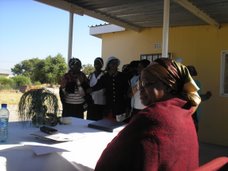
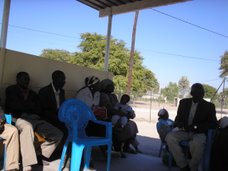
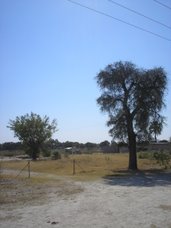
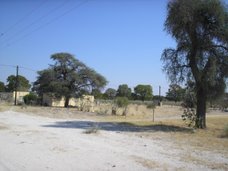
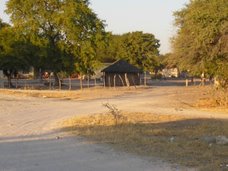
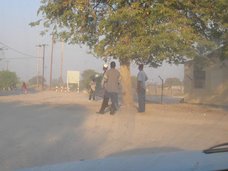
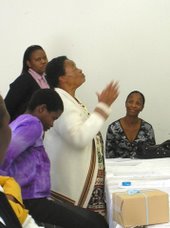
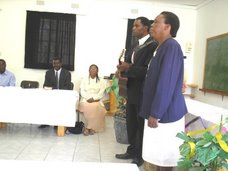
Since I arrived we've been working at a reasonable pace and our days have been varied for one reason or another. As you'll see from the photo's, last Monday we were invited to Boseja Kgotla to explain what the project is about. Usually we are at the Lutheran Church Clinic on a Monday from 0800 - 1600 with an hour for lunch. That afternoon we could go home early as noone had come to clinic that afternoon.
Tuesday's we're at WoMen Against in the morning and seeing private patients in the afternoon. That's a very different kettle of fish altogether as we do not have to use the Maun Homoeopathy project triad method. You'll have read about that in the post above this. I'm going to try and fix it so that My postings run chronologically from oldest at the top to most recent at the bottom. It doesn't make sense, the way it is now.
Wenesdays we do home Visits for Lutheran Church Clinic Patients and Thursday's were back at the Lutheran Church Clinic all day. Friday is always varied as we go on a thrice weekly rotation to Boseja Kgotla Clinic, Maun Conselling Clinic or Sennonori, which is run by the woman who comes each week to sweep our yard and do our washing. A good example of the blurred boundaries we are always warned about!
Tell Us About The Triad
OK. The triad ought to be fairly easy for most homoeopaths to understand as it seems to be based on Eizayagers 'Layers Method'. However, rather than treating each layer of the case sepparately we prescribe concurrently. At present i'm not quite sure of how the Triad came to be used. I feel a bit of an idiot because of that. Why didn't I bother asking? Hmmm.
I'm still in Maun, of course. I'm just beginning my third week here and I've just begun taking cases on my own. Last week I was alternating with Julia. Having her there to discuss case analysis and remedies with me made things a lot easier, it felt a lot less pressurised than thinking alone.
Since I arrived we've been working at a reasonable pace and our days have been varied for one reason or another. As you'll see from the photo's, last Monday we were invited to Boseja Kgotla to explain what the project is about. Usually we are at the Lutheran Church Clinic on a Monday from 0800 - 1600 with an hour for lunch. That afternoon we could go home early as noone had come to clinic that afternoon.
Tuesday's we're at WoMen Against in the morning and seeing private patients in the afternoon. That's a very different kettle of fish altogether as we do not have to use the Maun Homoeopathy project triad method. You'll have read about that in the post above this. I'm going to try and fix it so that My postings run chronologically from oldest at the top to most recent at the bottom. It doesn't make sense, the way it is now.
Wenesdays we do home Visits for Lutheran Church Clinic Patients and Thursday's were back at the Lutheran Church Clinic all day. Friday is always varied as we go on a thrice weekly rotation to Boseja Kgotla Clinic, Maun Conselling Clinic or Sennonori, which is run by the woman who comes each week to sweep our yard and do our washing. A good example of the blurred boundaries we are always warned about!
Tell Us About The Triad
OK. The triad ought to be fairly easy for most homoeopaths to understand as it seems to be based on Eizayagers 'Layers Method'. However, rather than treating each layer of the case sepparately we prescribe concurrently. At present i'm not quite sure of how the Triad came to be used. I feel a bit of an idiot because of that. Why didn't I bother asking? Hmmm.
So, I'll tell you about what I know about the triad method so far and what my experience is of it, so far. My opinions are bound to change as I have only been here two weeks so far (today is Tuesady 26th of June) and I have not been in touch with Hilary to get an idea of how the method developed. Anyone reading this from top to botom will read my most recent insights first.
The Triad Layers
The Triad Layers are - 1) Acute; 2) Constitutional; 3) Miasmatic.
At present I'm finding this method a little unwieldy, mainly because very few people we see have acute illnesses, their symptoms are long standing. Because of this I could understand prescribing a remedy for the chronic illness and another for the miasm but having to work in a third seems to me to be a bit of a contrivance.
But, we have to prescribe this way as Hilary wants to see the results of long term Triad prescribing. Things probably wouldn't be so rigid but for characters like me turning up and saying 'I'm not prescribing like that!' and doing their own thing. Luckily for the project I am not in a rebellious mood and I am happy to follow the protocol and see where it takes me
So that I feel happpy using the Triad method I've worked out a few ways of justifying to myself why 3 remedies are being prescribed.
My idea of how to Prescribe for "Acute" Layer = 1) remedy for totality of an acute miasm or exacerbation of chronic disease; 2, As a support for acute mental emotional states if Px has chronic symptoms.
Constitutional Layer: Patterns of Health / Ill Health & Menatal Emotional Reactions.
Miasm: Can an appropriate miasmatic link be made between acute and chronic symptoms? Which miasm is most obvious in the case?
And it feels even better prescribing this way if the remedies used can be related. Still, at present I'd feel less of a headache using just one or two remedies at a time.
So that I feel happpy using the Triad method I've worked out a few ways of justifying to myself why 3 remedies are being prescribed.
My idea of how to Prescribe for "Acute" Layer = 1) remedy for totality of an acute miasm or exacerbation of chronic disease; 2, As a support for acute mental emotional states if Px has chronic symptoms.
Constitutional Layer: Patterns of Health / Ill Health & Menatal Emotional Reactions.
Miasm: Can an appropriate miasmatic link be made between acute and chronic symptoms? Which miasm is most obvious in the case?
And it feels even better prescribing this way if the remedies used can be related. Still, at present I'd feel less of a headache using just one or two remedies at a time.
Monday, June 11, 2007
What was your first day at work like?
It began early at 6 o'clock and it felt earlier as it was still dark. Luckily it was probably the warmest morning Maun hashad for a few weeks, otherwise it would have been freezing.
Weha to be up early as Hilary, who set up the projct 5 years ago, was flying home and was giving a talk to the district health workers about the role of the project at 07.30! We drove through the scrubby brush jungle from our cottage on the bank of the river as the sun wa rising.
As it was my first day I was sitting in with Julia who has worked on the project before.About half the patients we saw needed an interpreter. This was a new and interesting experience for me but I didn't feel it detracted from the quality of the consultation. The rapport is built up between the patient and practitioner. The interpreter passes information betwen them. Of course, the interpreters have been trained not to rephrase what patients say or colour the information they relay with their own opinion. Altogether, I think this system works well.
This was only my first day and I'm going totell you more about what it's like to run a consultation through an interpreter but I was favourably impressed. I don't know what anyone else was tinkng but I recall that while I was studying I was getting theimpresion that the consultation room is a very fragile and sacred space and he slightest 'bad vibe' could upset the whole dynamic of the relationship between patient and practitioner.
It is and it isn't. The consultation and consulting rooms, likepatients are individual, fragile and sacred things which must be approached with humility and the right intention. At the same time, like people they are flexible, adaptable and resilient.
The consultation is made up of two components, patient and practitionr, 3 in Maun if you include an interpreter. When these components are comfortable in the space, wherever it's location, whatever it's shape or size the cosultation will work. Do all the components feel happy? Do they agree to be in the space? Do they know what's going to happen? Yes? OK, carry on, it will work. That's the key.
I'll tell you more about my discoveries in my next thrilling installment of 123 Homoeopathy!
Thursday, May 31, 2007
Maun Homeopathy Project
It's about time I told you something about the Maun Homeopathy Project. I've cut and pasted this from the MHP website to give you an idea of what the MHP is about. I'll tell you more from my experience once the adventures of Rowland in Africa have truly begun.
At present I'm Rowland in London, gradually folding and filing the garments and articles of my existence here before I pack my bags and go. I'll tell you more about how I came to join MHP in a future post. Until then here's the introductory page to MHP's website...
The Maun Homeopathy Project Healing for Strength and Survival
MHP is a registered charity (No. 1109958) founded by Hilary Fairclough and Philippa Brewster in 2002:
- Establishing a permanent and free homeopathic service for women, men and children living with HIV and AIDS and/or traumatised by rape in Maun, Botswana
- working in partnership with agencies in the local community
- offering holistic care to people suffering from illness, trauma, grief and stigma
- travelling light with a mobile clinic providing an outreach service for those most in need
- to recruit and support local people to train in homeopathy to an internationally recognised standard
A Community in Crisis
Since 2002, The Maun Homeopathy Clinic has been running free homeopathy outreach clinics in Maun, a fast growing town in the north of Botswana, (click here to view map) where over 35% of the people are infected with HIV or AIDS, one of the highest rates in the world.
The epidemic has put this hitherto strong and confident democratic country into crisis and the Maun community like the rest of the country is suffering as a result. Everyone is affected and trying to cope with its daily devastating effects.
Maun is now the centre for the provision of medical and social care for people affected by HIV and traumatised by rape living in the town and its surrounding areas, but more help and other approaches are desperately needed.
Homeopathy fills the gap for a holistic approach to healing which is complementary to the existing and stretched medical and counselling services.Click Here for more on HIV and AIDS in Botswana
How can you help?
Make a regular donation by standing order; make a one off donation - Click to Donate now!Join our email list for news of fundraising events and for the MHP Newsletter - Contact Us
Our logo: The Baobab Tree
One of the great symbols of Africa, the Baobab Tree symbolises Strength, Survival and Longevity and all parts of the tree have nutritional and medicinal value.
Wednesday, May 30, 2007
Homoeopathy in the NHS
If you've read my last post, The Story So Far, you will realise that the future of NHS provision of homoeopathy hangs in the balance. This letter from Dr Peter Fisher, the Clinical Director of The Royal London Homoeopathic Hospital was forwarded to me today. If you read this post please lend your support by encouraging your MP to call for an Early Day Motion.
Parliamentary Early Day Motion on Homeopathy in the NHS28/05/2007
The battle is reaching a critical phase with important PCTs about to take decisions and the renewed attack this week by Born, Baum Ernst and co.
Our Early day Motion is doing quite well: 117 signatures so far. See http://edmi.parliament.uk/EDMi/EDMDetails.aspx?EDMID=33006&SESSION=885
it tells you who has signed and gives the full text of the EDM.
To get debate in the Commons we need 200 signatures.
Please check if your MP has signed at the website above. If s/he has not, please ask her/him to do so. The easiest way to do this is by email www.parliament.uk/directories/directories.cfm It tells you who your MP is if you don't know!
Suggested email text below
Subject: Please sign EDM 1240 in support of NHS Homoeopathic Hospitals
Dear xxx,
This is to ask you to sign Early Day Motion 1240 'NHS Homoeopathic Hospitals'. As you may know there are four NHS homoeopathic hospitals/specialist clinics in England (The Royal London, Bristol and Tunbridge Wells Homoeopathic Hospitals and the Liverpool Clinic). Despite their names, these units provide a range of complementary and alternative treatments, not just homeopathy, fully integrated into the NHS. They make an important contribution to the health of the nation and to patient choice, offering clinically-effective and cost-effective solutions to common health problems faced by NHS patients, including many chronic, difficult to treat conditions.
The homoeopathic hospitals are unique resources, highly valued by their patients, with a proud record of developing and providing safe, effective non-drug based treatments for common conditions. They have great potential to make further contributions, and to reduce the NHS's dependency on drug treatments.
The combined budget of these homoeopathic units is about £5m/year, a tiny proportion of the NHS budget. Yet in the current financial turbulence affecting the NHS their future is threatened by short-term, local, financially-driven decisions by PCTs.
I hope you will sign the EDM calling on the government to actively support these valuable national assets.
Yours Sincerely,
xxx
Thanks and best wishes
Peter
Dr Peter Fisher Clinical Director Royal London Homoeopathic Hospital Great Ormond Street London WC1N 3HR UK Tel (+44) (0) 20 7391 8890 (UCLH internal 18890) Fax 020 7391 8829 http://www.uclh.nhs.uk/rlhh
Parliamentary Early Day Motion on Homeopathy in the NHS28/05/2007
The battle is reaching a critical phase with important PCTs about to take decisions and the renewed attack this week by Born, Baum Ernst and co.
Our Early day Motion is doing quite well: 117 signatures so far. See http://edmi.parliament.uk/EDMi/EDMDetails.aspx?EDMID=33006&SESSION=885
it tells you who has signed and gives the full text of the EDM.
To get debate in the Commons we need 200 signatures.
Please check if your MP has signed at the website above. If s/he has not, please ask her/him to do so. The easiest way to do this is by email www.parliament.uk/directories/directories.cfm It tells you who your MP is if you don't know!
Suggested email text below
Subject: Please sign EDM 1240 in support of NHS Homoeopathic Hospitals
Dear xxx,
This is to ask you to sign Early Day Motion 1240 'NHS Homoeopathic Hospitals'. As you may know there are four NHS homoeopathic hospitals/specialist clinics in England (The Royal London, Bristol and Tunbridge Wells Homoeopathic Hospitals and the Liverpool Clinic). Despite their names, these units provide a range of complementary and alternative treatments, not just homeopathy, fully integrated into the NHS. They make an important contribution to the health of the nation and to patient choice, offering clinically-effective and cost-effective solutions to common health problems faced by NHS patients, including many chronic, difficult to treat conditions.
The homoeopathic hospitals are unique resources, highly valued by their patients, with a proud record of developing and providing safe, effective non-drug based treatments for common conditions. They have great potential to make further contributions, and to reduce the NHS's dependency on drug treatments.
The combined budget of these homoeopathic units is about £5m/year, a tiny proportion of the NHS budget. Yet in the current financial turbulence affecting the NHS their future is threatened by short-term, local, financially-driven decisions by PCTs.
I hope you will sign the EDM calling on the government to actively support these valuable national assets.
Yours Sincerely,
xxx
Thanks and best wishes
Peter
Dr Peter Fisher Clinical Director Royal London Homoeopathic Hospital Great Ormond Street London WC1N 3HR UK Tel (+44) (0) 20 7391 8890 (UCLH internal 18890) Fax 020 7391 8829 http://www.uclh.nhs.uk/rlhh
Subscribe to:
Posts (Atom)