Thursday, August 09, 2007

A KUDU REVEALS HIS DEATH

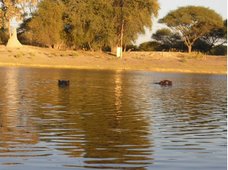
I recently visited the game reserve to see the giraffes. As I entered the bush I saw a big Kudu buck and decided to follow him whither he would lead.

I would get just to the edge of his comfort zone and off he'd go, kicking his heels up and disapearing into the trees and sage brush and I'd continue in the same general direction and get glimpses of him ahead of me before he charged off again. This went on for about an hour until I emerged into a clearing and there he was on the other side striking a classic pose with his body in profile and his face towards me displaying a remarkable pair of spiral horns and bigpink funnel-like ears. The early morning sunlight was slanting down through the branches and creating a wonderful wilderness scene. By a miracle he stood still long enough for me to take a photograph of him before he skipped off again.

He gave a hop skip and a jump and appeared to disappear into a hole behind some bushes. Curious, I thought, and walked as quietly as possible over there. As I got closer I could see the Kudu lying on the ground. At first I thought I had surprised him taking a dust bath and he was playing dead, but no. This was a reall dead Kudu.

I had to say thanks to the Kudu for letting me have his photograph and letting me get this close to a real wild African animal and share his space. I could have touched him if I had wanted to but I thought it was best to let him have his last moments in peace.

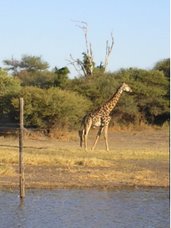
As I slowly left the clearing pondering on what fate led me to see a Kudu, a real , live , wild African animal keel over and die of old age like that, I almost walked into a young Girraffe, minding his own business and quietly chewing the cud.

He was kind enough to let me draw his body, couldn't fit his head on the page! I've some picasso-esque sketches of his head though which he kept moving around. I saw three giraffes in all, one a mature female who galloped in silent slow motion into the trees! They're incredibly beautiful animals. And when they run, even with trees, bushes and branches all around there is absolute silence, it's like watching a dream!

Sunday, August 05, 2007

Rowland's African Day

I had a really African day on Saturday. For the first time in a long while I’vefelt as though I’m actually in Africa. In recent days we’ve been becoming busier and busier in and out of clinics and except for a visit to Hilary’s house we’ve just been working, doing admin to keep things running and going home.

However, things changed for me on Saturday when I had a bit of an odyssey. Saturday was the day Noah was meant to visit and check our poor weak backie out and see what was wrong with it and put it right. Anne elected to stay behind and wait for him as she was sick and tired of driving our sick and tired backie around. So I went in to town.

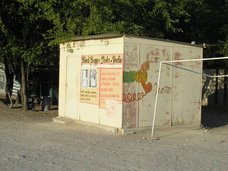
My first stop was at the barbers. I had intended tosee the guy again who Alex had reccomended at airport junction but he was not around so I walked up to Old Mall as there is a profusion of barbers shelters there.

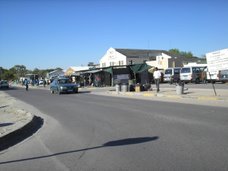
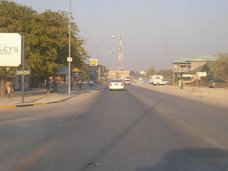
The day was bright and the air was cool as I walked into town as it was not yet ten o’clock. It’s a nice feeling to walk along roads which you normally drive down in the heat of midday, full of traffic between one appointment or another and these roads are quiet and the traffic moves slowly.

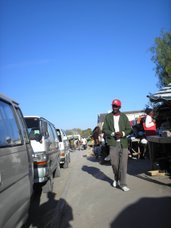
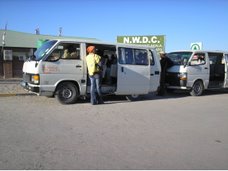
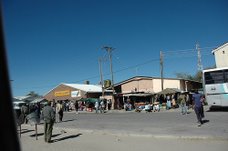
As usual there were crowds of people and vehicles outside shoprite, combies still jostled for position at the rank and the soundsystem still played fluid rythmic tunes into the air but I had time to take it in. The bright light forces you to squint and this narrows your field of vision to a space immediately in front of you and the environment is felt rather than seen until you reach a patch of shade and can widen your vision and take things in.

You can see big built Batswana middle class families coming and going at shoprite in big 4X4’s, tiny barefoot children with tinier siblings stand in groups intent on childish things, there are young women getting their hair braided in the shade of trees and awnings, phone credit hawkers in yellow vests break away from the crowds at the bus station like free electrons from the nucleus of an atom, flash youths in baseball caps, polo shirts and ripped jeans prowl the mall, young guys stand in groups chatting, laughing, smoking shouting out to their friends passing in cars, great stately Hereo women in brightly colored cloth sailing through the dust and crowds, gents in dark two-piece suits, collar and tie wearing stinge brim trilby’s looking like CIA men.

Like the Indian barber who practices his art on the street in the shade of a tree the barbers of Maun work in shacks made from planks and shade netting which provide a cool cave like shelter from the bustle of the street. Inside written in felt tip on the wall is the tarrif and below it are glued fragments of a mirror in which you can see your portrait as Picasso might have painted it.

You can choose an office cut, an English cut, a brush cut, a brush cut punk, or just a shave-no-style. Not knowing what to choose I asked the barber to make my hair short and smart and waited for the sesult.

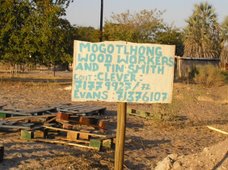
Anne and I are hoping to include some barbers signs in the Sign Safari. They all appear to be in the same hand and include 3 heads which look like they are Batswana celebrities copied from films or newspapers. And, they all appear to advertise 3 styles, short, very short and shiny. I was fortunate and came away with a sort of Matt Gloss, which suited me fine.

I then turned my footsteps down Tsheko Tsheko road, past Choppies another big supermarket on one side and the victorian looking general dealers, butchers shop and electrical dealers on the other, with it’s concrete arcade and cool, dim, cavernous shops entered by a single door and smelling of dust and dried goods. Down Tsheko Tsheko road (which means Court-Case Court-Case Road) to the 4 way junction and turned left at the Hereo settlement corner and headed down to the small bridge which would take me to the Francistown road.

On my way there I passed students in their blue uniforms, I was passed by a wedding party driving slowly and tooting, a group of singers in lime green shirtsand orange waistcoats belting out songs from the back of a backie and giving thumbs up to everyone they pass, donkeys drowsing by the side of the road, herds of apparently unacompanied goats coming upo the embankment beside the bridge, horses wading in the river nibbling reeds, young people looking as though they are waiting to meet other young people on the bridge and finally I turn right, onto the Francistown road.

The Francistown oad is long and straight and in the full heat of the day, I pass builders yards and garages and the take-away/liquor rests that we pass on our way back from the pool which look so lively and inviting in the light of a Saturday evening. Cars pull up and drive away, a few people hang around outside drinking soft drinks and talking into mobiles, huddles of people with there baggage stand in the dust in the shade waiting for the hourly Francistown combie.

I reach the Ubuntu Cellphone & Landline shop and remember that I’ve not year eaten breakfast. But first, a note on Ubuntu. What is Ubuntu, Mageu maize milk ‘Salutes the Spirit of Ubuntu’, a liqueur made from Morula trees is decorated with ‘Ubuntu Beads’. Mary tells me that Ubuntu, roughly translated means ‘ancestral spirit or the soirit of the ancestors or something very traditional.

I head for the second Take-Away/Liquor-Rest outside of Maun, the Boseja Take-Away. These places, like the general dealer and butchers I mentioned earlier have a victorian appearance, being a single storey L shaped block of a building with the roof coming down low over the walk in front of the stores and making an arcade. These are the parts of Maun that really give it it’s frontiers-town atmosphere. Again the stores inside are dim and quaint knocked together looking. The Boseja Take-Away consisted of a counter behind which stood three big coke and beer fridges, full of beer, coke, softdrinks and things to be kept cool. On the counter in a glass prism were bags of fresh doughnuts and sliced grubby looking bread (aside from Hilary’s home-made bread available in loaves from the coffee shop bread is in a pretty low stageof evolutin here) and plates of Chicken & Macaroni, Chicken & Rice, Chicken & Papa.

There was a hand drawn and decorated ‘halal’ sign over the kitchen door and the place was run by a smiling, friendly Indian man with big Indian hair and a moustache. He was very helpful in explaining the intricacies of his menu and so I chose the chicken and macaroni which was spiced up by a big blob of ketchup. As I dined I was able to appreciate the idiosyncracies of decoration within the Take-Away. The walls were a smoky orange and were overpainted with abstract unmistakeable tiger stripe patterns. What lent the place a disturbing quality was the addition of about 4 pairs of Tigers’ eyes peering through the jungle and looking hungrily at the customers as they ate their chicken.

MMMM! That filled a yawning chasm at my core and I set off bouyed by a healthy balance of spices, e-numbers, protein and carbohydrate for my weekend swim.

I had still further to walk before the giant watertower on stilts which marks Matshwane school appeared. I let myself in as there was no old deuteronomy guarding the gate and went to the pool. Walking round to the deep end the air felt warmer than usual. I steeled myself to dive into the icy night cooled waters and dived in. Yet, I was pleasantly surprised to find that the water wasn’t quite so cold and when I reached the other end of the pool I was even happier to find that I was withouth the urge to leap out of the pool, dry off and bake for the rest of the day. I lounged for a bit with my elbows on the side and enjoyed the contrast of the hot sun, warm breeze and now invitingly cold water.

I did 18 lengths in two sessions with a baking out period in between. I was once again pleasantly surprised at my stamina which I now, on reflection ascribe to the running I now do every other day. As I knew I had a long walk back into town and dinner at Marty’s at 6 I left at about 3.30 while the sun was still hot.

The problem now was how to get home with the greatest expedience without having to walk home the way we drive as it is a very very dusty road. The easiest way would be a combie to the big bridge and then walk down along the river. This is what happened and so I was able to enjoy a walk home along the river in the beautiful African afternoon light.

Check It Out!

Hey folks!
I can now put pictures in my text! Lets's see what appears in the future!

Friday, August 03, 2007

आ वाल्क ब्य थे रिवर / A Walk By The River

Hi Folks! All of a sudden the Hindi converter starts working again! Apologies to all my readers inHindi who have missed this in recent posts.


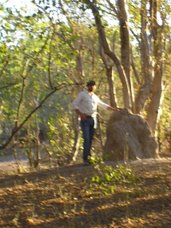
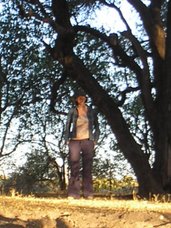
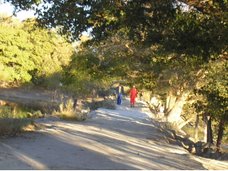
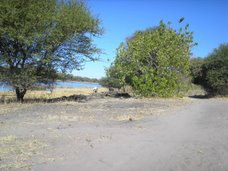
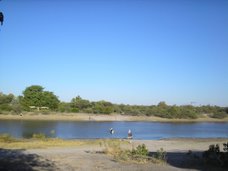
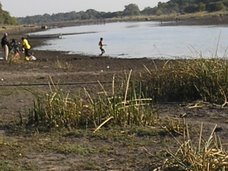
Here you see some pictures from a recent walk along the river bank and an exhibit from the Sign Safari। नमस्ते, हिंदी रेअदेर्स! वेल्कोमे बैक!हेरे यू सी सोम पिक्टुरेस फ्रॉम आ रेसन्त वाल्क अलोंग थे रिवर बैंक ऎंड अन लुठेरण चर्च थे ऎंड वी।


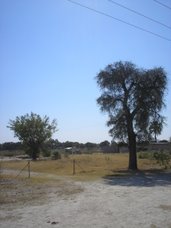
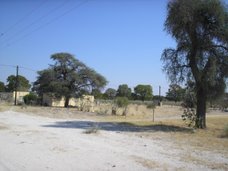
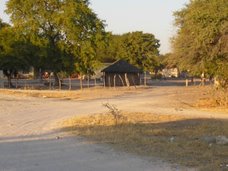
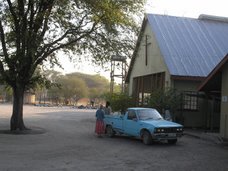
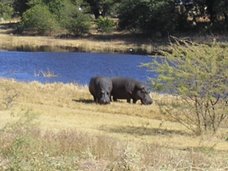
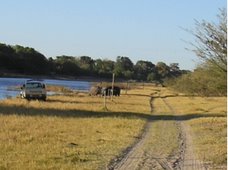
The sun is begining to linger longer in the sky in the evenings and the river is higher than ever and is a very beautiful place to be in the evening. This is good as our lives here are beoming busier by the minute. more and more patients are visiting us at the private clinic. This is good as the patients who pay to see us there help to support the free homoeopathy clinics we run at The Lutheran ChurchThursday is by far our busiest day. It is a full day at the Lutheran Church Clinic and we अरे now seeing around eight patients each। Patient numbers have been gradually creeping up on a Thursday and down on a Monday because people have begun to think that Thursday is our quiet day. So we've been asking our patients to come for their follow up visits on a Monday.

Wednesday is quite a hard day as it is the day we see our home visit patients. As I have said before these consultations are hard because the patients are very sick and bedridden. The consultation is haarder because you are in a room with a very sick person, their relatives our translator and another homoeopath. One can feel concerned about the expectations of the patient and their family, concerned about intruding into a persons home with a great caravan of people as well as trying to come to a decision about how to prescribe and handle the case.

You need a cool head to do this and it's not easy but thankfully our days were not so full as they are now when I first startred. This gave me the chance to understand our prescribing method and the dynamics of our various consultations. I feel comfortable now about involving the patients relatives and our interpreter in the consultation and using their input and insights into the case. It was something I did in the past as a matter of form but now it feels like a natural and comfortablepart of the consultation.

We've got a good protocul between us as homoeopaths, Anne and I which we organised when there were three of us including Julia. We go through the cases before the home visits to get an undertsanding of the cases and decide who will take the case and who will facilitate the prescription. This gives the prescribing homoeopaths two heads to think with and makes the vexed questions about remedies and potency easier to overcome if the case is difficult.
Still, it's a hard days work. Thankfully we get on well and take care of each other. We've both got experiences and insights to share and have a good laugh when we're not working. I'm glad to say we're a good team!
Thursday, July 26, 2007

Three Patients Sitting In The Sun.

Today (Wednesday 25th July) was one of our hardest working days। Wednesdays usually are as they are the days we do home visits। Home visits are hard work for several reasons. They require us driving over very rough and/or sandy roads and we often get stuck in the sand; Consultations are often taken outside patients houses in the yard in the heat of the sun; We see very weak and often bedridden patients; We see very severe physical pathology. On the plus side we meet very strong people.

The patients’ strength makes their condition all the more poignant as we meet very strong people who are imprisoned in their own bodies through weakness. You can hear their strength in their voices, see it in their eyes or hear it in their words and it makes them appear in a very pitiful and tortured state as they cannot fend for themselves or engage with the world at large any more.

Seeing this strength although saddening to see imprisoned in a bed makes me optimistic that the patient will in time recover and this week I’ve seen this strength win through.

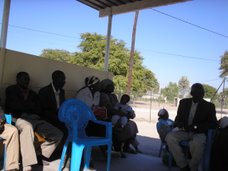
Today we were very happy to see three of our patients who were bedridden a week ago sitting outside in the sun. One was the albino patient I described in an earlier posting. Her first words when we met her were ‘I’m well!’. Her ulcers were clearly healing and she was very pleased to show us the progress they were making whereas at our previous visit shewas very weak and in a lot of pain and her ulcers were open wounds.

Our second patient had been in bed for months with diarrhoea and vomiting. Today she was sitting in her yard in the shade of a tree, proud to tell us that she could walk to her outhouse and back. Next time, she told us ‘You’ll see me cooking’.

Our third patient had also had constant diarrhoea which was now improved. Like the other patients she was sitting in her yard in the sun with her mother, her daughter and her grandchildren who were all playing at ‘foreigners in a decrepit pick-up stuck in the sand’.

I’m not describing people rising from the dead here. In all three cases there is a long way to go before they are as healthy as they’d like to be but the fact that they are out of bed, have more physical comfort and energy than before and doing things they enjoy is a big step for them on the road to recovery.

I’m pleased to say that many of the patients I am seeing now are improving or are returning to homoeopathy after a long time of being well. I’m not saying that this is all down to my sudden appearance on the scene. It is more due to the strength which the patients themselves posess and the many other homoeopaths who have added their skill to the proces of recovery.

The Flexibility of The Triad Method.

It’s when there is a change in symptoms rather than an improvement after the first prescription that one can see the flexibility of the triad method. An easy example togive is the first case at a subsequent follow up.

***The patient did well on their first and second prescriptions but they have returned. Their joint pains have returned but they find that they are now worse at the end of the day when they are at rest. They have to keep moving to keep the pains at bay. They began again around the time their children were threatened with expulsion from school because they were late with school fees (Everyone has to pay school fees in Botswana whether government or private school). The patient became worried for their children's future and took on extra work. Nothing much else worries them aside from their families welfare and their responsibilities.

In this case the aetiology of the joint pains and their characteristic of being worse for rest and better for continued motion indicates not Bryonia but Rhus Tox. The patients underlying constitution and background remain unchanged so far so the prescription can be repeated with the Bryonia, the initial remedy for the patients joint symptoms being changed for Rhus. Tox. Calc and Carc can be repeated as before.

More Medicine of Experience.

I’d like to let you know more about the triad method and how I am using it in the treatment of patients with HIV. I described it in an earlier post as being like an often repeated single remedy. It is like that but it is also a subtle and flexible therapeutic intervention.

To make this easier I’ll give you an example of triad prescriptions for the sort of cases we often see. The cases given below are outline examples as a full case taking would be too much to present.

*** A patient has begun to get joint pains which are worse on motion and better for rest, these areaccompanied by a terrible headache which makes them just want to sit still and not be bothered by anybody. They naturally have become very bad tempered. Their focus in life is their home and family as they had to care for younger siblings and older relatives from an early age their parents died of cancer. They have recently had to cope with a bereavement and now care for another family members’ children. They take this responsibility very seriously. Their major worries are the pains which prevent them from working and this in turn makes them worry about how they will cope with their responsibilities.

After repertorisation the well indicated remedies include Bryonia, Cal.Carb. and Carcinosin. In this sort of case we would usually give each remedy one day apart in the appropriate potency for up 3 weeks Bryonia on Mondays, Calc. on Wednesdays and Carc. on Fridays.

Case 2

*** A patient is seen at home and they present with with diarrhoea accompanied by burning pains, respiratory difficulties, generalized physical pains at night and a very depresed state of mind. This has been continuing on and off for a long time but is now a chronic state and they are rapidly emaciating though they are trying to eat.

The well indicated remedies repertorise out as Ars. Alb.; Carbo.Veg.; and Syph.

As the condition is long standing and day by day worsens the patients health the remedies would be given over the course of a day in an appropriately low potency for a week.

In these hypothetical cases the patients show a good response at the follow up, they’re not completely cured but they’re much better than before.

So far so good. In these two cases the triad prescription has acted like a single remedy. There’s been a good reaction in the patient on all levels and the prescription can be repeated with confidence that it will continue the curative response in the patient.

The Dawning Of A New Era

The river is halfway up the tree trunk which marks the makorro stop behind our house. The river is high all along the banks. The landscaspe here is in constant flux. The new road being built has successive layers of surfasce put on it and levelled off. The tyre tracks on the dirt roads which have been carved in the land beside it, winding in and out of trees seem to develop and lose ruts and potholes by the day.

We’re entering a new and exciting phase here in Maun. It is only one third as exciting now as it was a week or two ago but it is still exciting. Initially Anne and I were to be responsible for setting up a new clinic in Sehitwa, 90K southwest of Maun on the shores of Lake Ngami. We were also given responsibility for re-energising the poorly attended Senonori Support Group Clinic and of re-establishing our relationship with Bana Ba Letsatsi which means children of the street and as you can see from it’s name is a charity for streetchildren and children orphaned by HIV.

Sehitwa and Senonori unfortunately had to be put on the back burner because of logistical difficulties. As Sehitwa is 90k away we would have had to have used a vehicle other than our backie which is in pretty poor condition because it has to cope with some pretty rough terrain and is driven by several different people each year who each have to get used to an antiquated backie and very rough roads. This problem was almost solved by a member of the Lutheran Church’s congragation offering to loan us a vehicle for the journey. The only problem was, they wanted us to pay for mileage/wear and tear to the vehicle at 3 pula per kilometer in addition to us paying for petrol.

Then there was the question of which day we should go. We’d all agreed that once a month was a good routine for a one day clinic at the Lutheran Church in Sehitwa. For the Sehitwa group Thursdays was a god day. For MHP Mondays were preferable. Because there were too many if’s and but’s this project has to beleft until we get a new vehicle in September.

Senonori is another pickle. The time before last when we visited we saw only one patient. We had a chat with Rosinah the Senonori Support Group leader and she suggested that it was due to people’s fear of being stigmatised that they didn’t come to see us. We had another discussion with Rosinah this week and she told us the following story. As well as people in the area being worried about becoming stigmatised if they are seen visiting the homoeopathic clinic there is also a problem with the support group itself with whom we work. I can’t be quite sure of what it is despite having spoken to Rosinah who is Senonori support Group’s founder. It has something to do with it not being registered with the regional council department which looks after support groups despite SSG having applied for registration 3 years ago. Rosinah tells me that in addition to a lack of local government support and the fear of stigma of it’s members there is also now a suspicion in the community that Maun Homeopathy Project is something to do with the local council and we are checking up on them.

We’d arranged with Rosinah on several occasions to speak at local Kgotla meetings but due to one cause or another they’ve not happened. So, we are to continue turning up at Senonori but not to expect much to happen.

So, like I said, due to the Senonori and Sehitwa projects being put on the shelf things are only one third as exciting as they appeared to be. We do still have Bana Ba Letsatsi to look forward to which we will begin in August.

Tuesday, July 24, 2007

Homeopathy Research Institute

Even though I am out of the country I have my ear to the ground. This has come to me via Helen Dalton who is part of the South East London Homeopathy Group (SELHOG) team and who runs a case supervision group which Anne and I attend. This sounds like a very interesting project.

Homeopathy Research Institute
www.homeopathyresearchinstitute.org
PRESS RELEASE
(July 16TH 2007, London) The inaugural Board Meeting of the newly
formed Homeopathy Research Institute (HRI), took place in London in
June signalling a new era in the field of homeopathic research in the
UK.
The aim of the Homeopathy Research Institute is to promote and
facilitate high-quality scientific research in the field of homeopathy.

The HRI will be the first central resource dedicated solely to research

about homeopathy as it is practised today. A key task of the Institute
will be to communicate about the science relating to homeopathy to the
medical and scientific communities, the media, the general public, and
to homeopaths themselves. The Institute will form a bridge between the
scientific and homeopathic communities backed up by a strong PR and
communications team.
The Institute was founded by Dr. Alexander Tournier who holds a PhD in
Biophysics from the University of Heidelberg and is a fellow at Cancer
Research UK in addition to being a qualified homeopath. This background

places Dr. Tournier in the unusual position of being able to speak the
language of both academic science and homeopathy. He says, “Through
this institute, my aims are to strengthen the scientific foundations of

homeopathy, and promote homeopathy as a sound system of medicine
well-deserving of a place alongside conventional medicine."
The HRI’s Board of Directors consists of Dr. Tournier, Clare Relton
Msc, RSHom, (DH training fellow in CAM Health Services Research at the
University of Sheffield), Marcus Fernandez LCPH, MHMA, (homeopath and
vice-principal of the Centre for Homeopathic Education), and Dr. Nagin
Lad PhD, LCHE, (biochemist and homeopath). The Board is currently
supported by a team of consultants including Dr. Patti Bayliss, McHB,
FRCG, Sara Perkins Bran LCHE, (PR consultant and homeopath), and Dr.
Natasa Peric-Concha PhD , (molecular biologist and trainee homeopath).
At the inaugural Board Meeting, the participants established a
Scientific Committee in charge of developing the research program of
the Institute. The Scientific Committee is headed by Dr. Tournier along

with Clare Relton, and is presently composed of Dr. Lad and Dr.
Peric-Concha, Dr. Lionel R. Milgrom PhD, FRSC, RSHom, MARH, Dr. Mike
Emmans Dean PhD, MARH, Dr. Elizabeth Thompson MBBS, MRCP, FFHom, and
Prof. Kate Thomas among others.
Clare Relton, who is currently developing appropriate trial designs for

homeopathy research says, “I am very excited to be a part of the
Homeopathy Research Institute as it will pull together ongoing
homeopathy research and be a resource for new trials. Treatment
methods, homeopathic remedies and principles, cost effectiveness,
efficacy and safety are all areas the Institute will be examining.”
The Board also elected a PR Committee entrusted with developing the
communications strategy of the Institute. This consists of Marcus
Fernandez, Sara Perkins Bran and Natasa Peric-Concha.
The HRI invites participation from interested groups and individuals.
In particular, we would like to hear from people with fund-raising
expertise who are interested in consulting with our PR Committee. If
you would like to donate funds, find out more or help in some way,
please contact us.
Contacts:
Scientific Committee:
Dr Alexander Tournier PhD, LCHE
alextournier@homeopathyresearchinstitute.org
Phone 07843275751
PR Committee:
Sara Perkins Bran BA (Hons), LCHE
sara@imagohomeopathy.com
Phone: 020 8961 5948
Or visit www.homeopathyresearchinstitute.org

Sunday, July 15, 2007

The Medicine Of Experience

You’ll all be pleased to hear that I am beginning to understand the triad method. The founder of homoeopathy, Samuel Hahnemann described homoeopathy as the medicine of experience. It is only through direct experience that one can understand its scope whether as a patient or as a prescriber.

Seeing the patient

In this way have I come to understand the Triad Method we use to prescribe here. So, what happenned? Well, let’s look at it sequentially. Initially in the first two weeks of my stay hereI was looking at cases overJulia’s shoulder. It’s hard for me to get a real undertanding of a case from an observers position. It’s strange to imagine this but picture it. You’re in the same room as the patient and prescriber, not three feet away from them but the essential thing is, you are not face to face with the patient communicating with them directly. Sure, you have the time to read through their case notes and listenas the prescriber takes the case but you’ve not entered into a direct relationship with the patient.

The response to the remedy

The other problem was that many cases I saw befeore working solo were quite stuck. The patients had been neither getting worse nor appreciably better. They were generally long term patients and had a long history of remedies which had not moved them forward a great deal. So, you can understand, that when faced with this situation it is impossible to see how a patient has responded to a remedy and thus understand the prescription.

The development in my understanding of the Triad method came most importantly from working directly with patients. The first occasion was with an albino patient who has terrible ulcers on their skin. When we returned for a follow up we found them in a very weak condition. It appeared that they had become worse. One leg was swollen and had boken out in new eruptions.

Law of direction of cure


So how did this help to understand the Triad Method? The answer is careful case taking. We discovered that despite there not having been a general overall improvement her symptoms had shown movement in the direction of cure. Let me explain what this means. The Law of Direction Of Cure is probably better described as The Theory of Direction Of Cure as it can only be confirmed by repeated observations. Now, as each patient is an individual and will respond in different ways to the remedy the Law Of Direction Of Cure (LODC) cannot always be observed but it’s been observed often enough by homoeopaths that it has become an empirical guide to homoeopathic prognosis.

LODC states that illnesses is cured by the body healing itself from within to without. You can observe LODC operating in reverse during a cold. Usually the first symptoms to appear will be in the upper respiratory tract, the nose and throat. As the cold progresses it will begin to affect the lungs. This hypothetical cold will resolve under homoeopathic treatment according to LODC with the lungs being cleared first followed by the upper respiratory tract symptoms. Homoeopaths have seen this process at work in both chronic and acute illnesses. The law can be generalized to say that symptoms are observed to move from the centre of the body to the periphery; or from more vital organs to mucus surfaces or the skin.

In the case of the patient with the ulcerated skin we found, by careful case taking that although there appeared to be a worsening of symptoms (ulcers at a new site on the body and inflammation) they were moving from centre to periphery. During treatment the uklcers on the patients abdomen had cleared while new ones had appeared on their leg.
While the patients case remained serious from the perspective of pathology there was hope that their ulcers would heal as demonstrated by observation of LODC.

This demonstrated to me that the Triad Method of prescribing remedies worked and made it easier for me to accept it as a method to work with. At present I think that it would be impossible to say whether the patient responded to only one of the remedies or all of the remedies. For the sake of my peace of mind and to avoid expending valuable brain power on this question I rationalised that a triad prescription should be looked at as an often repeated single remedy. In application it is not this. Each remedy of the triad is taken sepparately but for the sake of case analysis it has to be seen as a single remedy to which the patient responds.

OK, so, I had seen a triad of remedies produce a favourable response in one patient. The next week I began practising solo. I was able to apply what I had learned under Julia’s close supervision to the cases which were returning to the clinics. My life as a prescriber was made much easier by the responses the patients had had on their remedies. Most of the patients I have seen since I began prsctising solo have been away from the clinics for up to a year because their last prescription produced such a favourable response.

Leaps in learning

How did this help me understand the Triad Method? Firstly seeing patients improve who are HIV positive and being treated with Anti Retroviral drugs (ARV’s) which can have some very debilitating side effects reinforced my acceptance of the Triad Method’s ability to work IN PRACTICE as opposed to theory; Secondly reading the patients notes, previous prescriptions and responses allowed me to understand further how triad prescriptions were formulated in response to which symptoms; Thirdly I was able to feel confident in my understanding of the case of each patient as they presented it to me and confident in my ability to respond with an appropriate triad of remedies.

I’ve been pleased to see that patients who I have prescribed for recently return with a good response to remedies which I have prescribed. This has really improved my confidence in using the Triad Method as I have begun to understand it by direct experience of working with it and seeing it work.